
Canyon Country Local
5.0 from 1 Google reviewsIndoor Air Quality Service in Canyon Country
Filtration, purification, and duct inspections that make the air inside your home actually breathable.
Call or text (888) 960-6003Request an estimate
Tell us what you need
Canyon Country Indoor Air Quality Problems We Fix
Indoor air quality service in Canyon Country is what Stay Cool Air Conditioning and Heating does for homeowners who've started noticing the difference between outside air and inside air. That scratchy throat in the morning, the layer of dust two days after you cleaned, the stuffy feeling that doesn't go away even when the AC is running fine. These aren't random. Canyon Country's high desert climate pulls dust, pollen from the Santa Clarita foothills, and wildfire smoke straight into your home through every gap in your duct system. If you're ready to actually do something about it, call (888) 960-6003 and we'll walk you through what's happening in your home.
What drives the cost and complexity of an indoor air quality assessment is mostly what we find when we look at your ducts, your filter situation, and your existing HVAC setup. A newer home with tight ductwork and a good filter rack needs a different solution than a 1980s house with leaking flex ducts and a standard 1-inch slot that's been running the same filter for six months. We look at your whole system before recommending anything, because installing a whole-house purifier on top of a leaking duct system is like mopping the floor with the faucet still running. Every job is different. Contact Stay Cool Air Conditioning and Heating for an accurate estimate.
What indoor air quality service covers
- Assessment of your existing filtration, duct condition, and airflow
- Identification of pollutant sources: dust, pollen, pet dander, VOCs, mold spores
- Recommendations matched to your home's size, age, and system type
- Installation of filtration, purification, or UV treatment systems
- Follow-up duct inspection or sealing when leaks are found
What We Find
Why Canyon Country homes struggle with air quality
The local climate creates conditions most filtration systems aren't set up to handle on their own.
High Desert Dust
Canyon Country sits inland, away from any coastal breeze. Wind kicks up particulate matter from the surrounding hills and it settles into ductwork, return vents, and coils. Standard 1-inch filters don't catch fine particles well enough to keep up.
Wildfire Smoke Season
Smoke particles are smaller than dust and far more irritating. During fire season, your HVAC system can pull smoke indoors faster than ventilation clears it. A higher-MERV filter or activated carbon layer handles what a basic filter can't.
Pollen from the Foothills
The chaparral and sage communities around Santa Clarita Valley are prolific pollen producers. Allergy season here runs long, and if your air handler is pulling in unfiltered outside air, you're living in it.
Aging Duct Systems
Many homes in the area have flex ductwork from original construction that's cracked, disconnected, or just plain leaking. Contaminated attic air gets pulled directly into your living space. No purifier fixes that until the ducts are addressed.
Tight New Construction
Newer homes built for energy efficiency can trap VOCs, cooking odors, and CO2 because there's not enough natural ventilation. Good air quality in a tight home usually requires active filtration or a fresh-air ventilation solution.
Temperature Swings and Humidity
The valley's dry summers and cooler winter nights create humidity swings that stress duct seals and can encourage mold growth in poorly ventilated areas. Getting moisture control right is part of getting air quality right.
Filtration Options
Filtration, purification, and UV: picking the right tool
How we assess your home's air quality
System and Duct Inspection
We start at the air handler and work through your duct system looking for leaks, blockages, and dirty coils. What we find here determines whether a filter upgrade is enough or whether duct repair needs to come first.
Pollutant Source Review
We talk through what you've been noticing: dust patterns, odors, allergy symptoms, musty smells in specific rooms. Combined with what we see in the system, this tells us which contaminants are driving the problem.
Solution Recommendation and Installation
We give you a clear recommendation based on your actual home, not a package upsell. If a better filter is the answer, that's what we tell you. If the system needs a whole-house air treatment upgrade, we explain exactly what it does and install it correctly the first time.
Ducts are part of the air quality equation
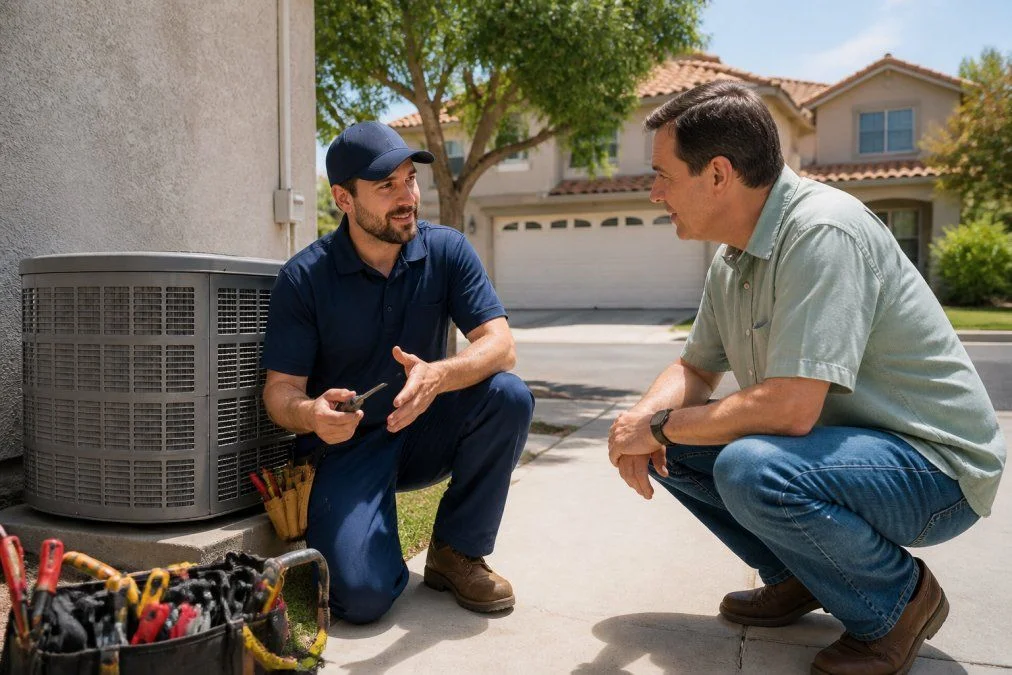
What Stay Cool brings to every indoor air quality call in Canyon Country
- Owner on the job
- David Medina handles the work directly. You're not getting a subcontractor.
- CA Licensed #1036487
- C-20 HVAC license, verifiable through the CSLB.
- 25+ years of field experience
- Backed by real-world knowledge of how SCV homes are built and what fails in this climate.
- No upsell pressure
- We recommend what your home actually needs. If a filter swap does the job, that's the call we make.
Common questions about indoor air quality service
What are the symptoms of poor air quality in a house?
What causes poor indoor air quality?
Is indoor air quality testing worth it?
What's the difference between air filtration, purification, and UV systems?
How often should I have my air ducts inspected?
Does my AC system help with air quality?
How do I know if I need a humidifier or dehumidifier?
How do I know if I need a humidifier or dehumidifier in Canyon Country?
Ready to breathe easier at home?
One call, one contractor, one honest answer.
Related
Next step
Tell us about the job
Your name, your number and what needs doing. A person from Stay Cool Air Conditioning and Heating gets back to you.
Rather talk now?(888) 960-6003
★★★★★
The owner David came over and installed the air conditioning and furnace in record time, 4 hours. This was during a heat wave. He and his crew were professional and courteous. They are a great family run business 😊.