
Canyon Country Local
5.0 from 1 Google reviewsHow to Choose the Right AC Size for Your Home
Call or text (888) 960-6003Request an estimate
Tell us what you need
Why Getting AC Size Right Matters More Than You Think
An air conditioner that is the wrong size will cost you money every single month, no matter how good the brand is.
Here is the core problem. An oversized system blasts cold air, hits its target temperature in a few minutes, and shuts off. That sounds efficient. Short run times leave humidity hanging in the air, wear out the compressor, and leave rooms feeling clammy.
This guide walks through the actual math, the factors that change it, and when to stop guessing and get a professional assessment.
AC Sizing by Square Footage: A Starting Point, Not the Final Answer
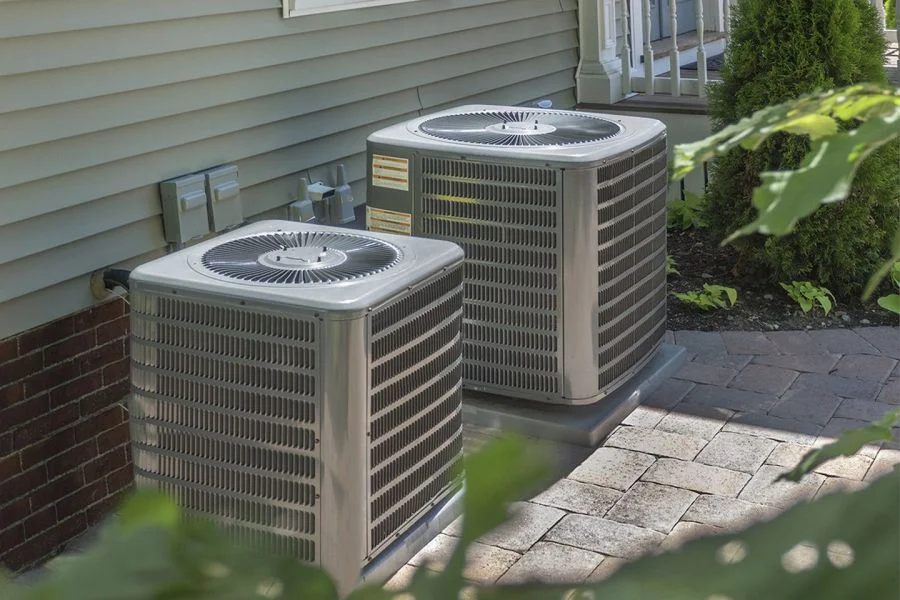
Square footage gives you a rough target, not a final number. The common rule of thumb assigns roughly 20 BTU per square foot of living space, which is useful for a quick sanity check and almost useless on its own.
A 1,500-square-foot home might land near 30,000 BTU by that math.
Treat square footage as step one. It narrows the range. It does not pick the unit.
Using an Air Conditioner BTU Calculator Correctly
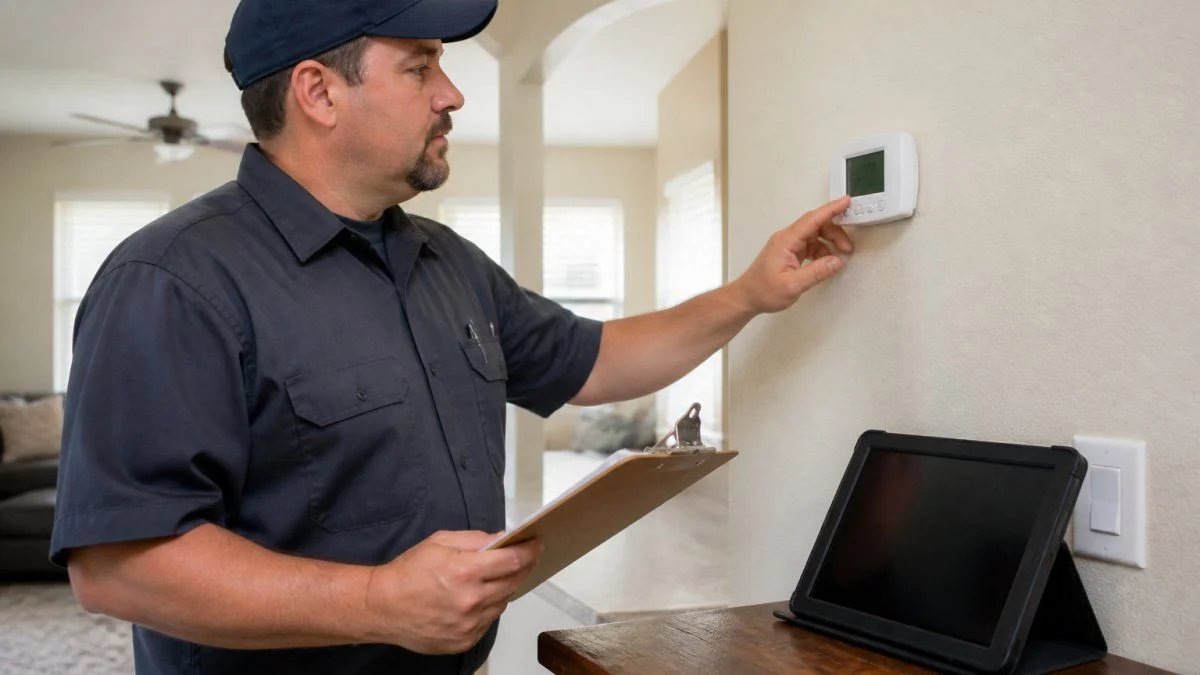
An air conditioner BTU calculator estimates cooling capacity from inputs like room area, ceiling height, insulation quality, and window count. It beats a bare square-footage chart, but only if you understand what it is doing and feed it honest numbers. Most online tools hide their assumptions, which is why two calculators can return answers 20% apart for the same room.
A Transparent Starting Formula
Here is a defensible baseline you can run yourself, with every assumption stated. Start with 20 BTU per square foot of floor area, then apply multipliers for the conditions that actually change the load:
Worked example: A 400-square-foot living room with 10-foot ceilings, average insulation, two large west-facing windows, and three occupants.
That lands near 10,500 BTU, meaning a 9,000 BTU unit would likely short-cycle on mild days and struggle on peak afternoons, while a 12,000 BTU unit gives headroom. This is the kind of range a good calculator should produce, and the assumptions should be visible so you can adjust them.
- Ceiling height: For every foot above 8 feet, add roughly 5% to the total. A 10-foot ceiling means about +10%.
- Climate: In a hot, humid summer climate, add 10-15% for the latent (moisture) load. In a mild, dry climate, subtract 5-10%.
- Insulation and air sealing: Poor insulation or a leaky attic adds 10-20%. A well-sealed, well-insulated home can subtract 10%.
- Sun exposure: A room with large west- or south-facing glass adds 10-15%. Heavy shade or north-facing glass subtracts 5-10%.
- Occupancy and appliances: Add about 600 BTU per person beyond two, and 1,000-2,000 BTU for a kitchen with active cooking appliances.
- Base: 400 × 20 = 8,000 BTU
- Ceiling (+10%): 8,800 BTU
- Sun exposure (+12%): 9,856 BTU
- Extra occupant (+600): 10,456 BTU
What Most Calculators Get Wrong
Two cautions matter. First, calculators assume the ductwork and airflow can deliver that capacity to the room, which is often false in older homes. Second, they cannot see your humidity load. In a climate with muggy summers, sensible cooling (temperature) and latent cooling (moisture removal) have to be balanced, and a calculator that only counts temperature will undersize the job.
Related
Next step
Tell us about the job
Your name, your number and what needs doing. A person from Stay Cool Air Conditioning and Heating gets back to you.
Rather talk now?(888) 960-6003
★★★★★
The owner David came over and installed the air conditioning and furnace in record time, 4 hours. This was during a heat wave. He and his crew were professional and courteous. They are a great family run business 😊.