
5.0 on Google Canyon Country (888) 960-6003
Indoor Air Quality Solutions in Canyon Country

Canyon Country Local

5.0 from 1 Google reviews

Indoor Air Quality Solutions in Canyon Country

Whole-house filtration, purification, and humidity control from a licensed Canyon Country HVAC contractor.

Call or text (888) 960-6003

Request an estimate

Tell us what you need
No obligation


By submitting this form you agree that we may contact you about your request and share your name and email address with partner companies for email marketing. We never share your mobile number or text message consent with third parties or affiliates for marketing or promotional purposes.

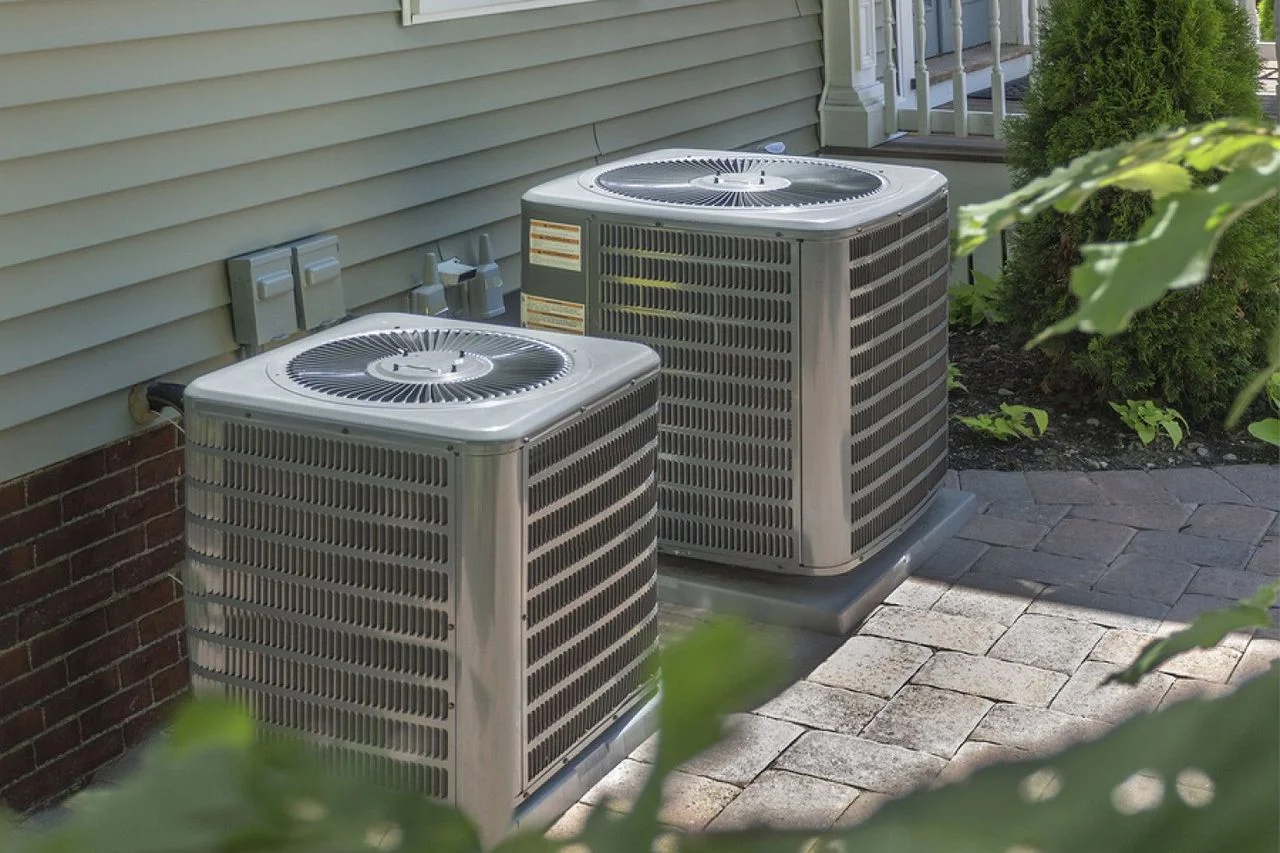
Two residential air conditioning units installed on an exterior patio next to a house with siding.

Canyon Country Indoor Air Quality Solutions That Work

Stay Cool Air Conditioning and Heating provides indoor air quality solutions in Canyon Country and throughout the Santa Clarita Valley, assessing what's in your air and installing the right equipment to clean it up. If your family is dealing with more sneezing, more dust on every surface, or a stuffy feeling that never really goes away no matter how often you clean, the problem is almost certainly inside your HVAC system, not on top of it. David Medina, owner and CA-licensed contractor (#1036487), will tell you exactly what your air needs and what it doesn't, and he won't sell you equipment you don't require. Call (888) 960-6003 to schedule an assessment.

Canyon Country sits inland, away from any coastal breeze, and the valley heats past 100°F in the summer. That means sealed homes, closed windows, and an HVAC system that's recycling the same air over and over. Dust, pollen, pet dander, and wildfire smoke particles build up fast in that kind of environment. The right solution depends on what's actually in your air: a basic filter upgrade handles some problems, but a home with mold spores or VOCs needs UV germicidal lights and whole-house purification working alongside your existing ductwork. Every job is different. Contact Stay Cool Air Conditioning and Heating for an accurate estimate.

What indoor air quality solutions actually cover

  • Assessment of contaminants: dust, pollen, pet dander, mold spores, VOCs, and smoke particles
  • HEPA and MERV-rated filtration upgrades installed inside your existing duct system
  • UV germicidal lights that neutralize bacteria and mold at the air handler
  • Whole-house air purifiers that scrub the air on every pass through your system
  • Humidity control to prevent the dry winter air that irritates airways and damages wood floors
  • Duct inspection to find leaks that pull attic dust and contaminants back into living spaces
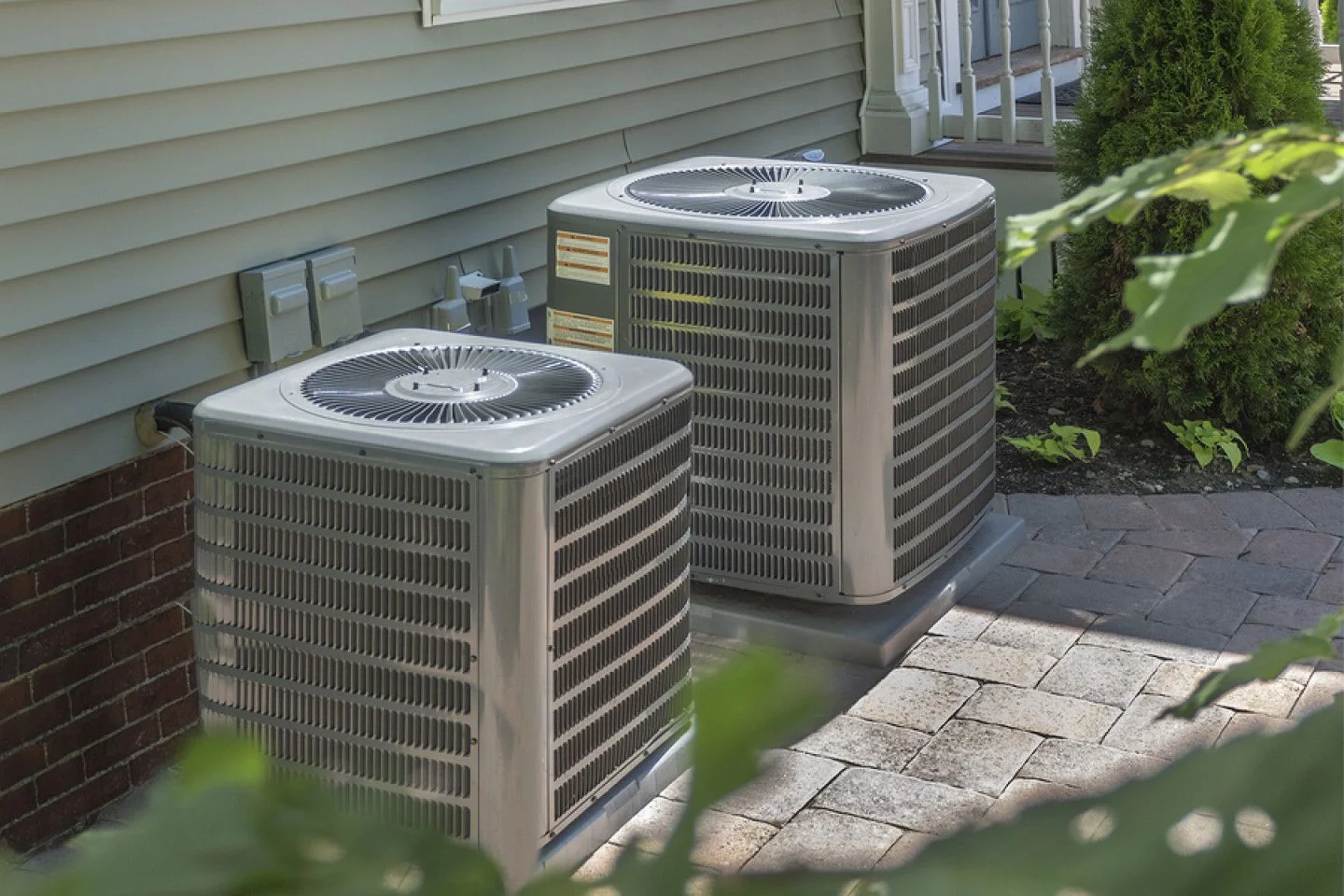
Two installed air conditioning condenser units positioned outside a residential home on a paved patio area.

Know The Signs

Signs your home's air needs attention

These are the signals most Canyon Country homeowners dismiss until the symptoms get worse.

Dust that reappears within days

If you're dusting surfaces and they're coated again by the end of the week, your filter isn't capturing what your system is circulating. That's a filtration problem, not a housekeeping one.

Allergy flare-ups indoors

Sneezing more inside than outside is a reliable signal. Canyon Country's high pollen counts and proximity to wildfire smoke seasons mean your indoor air can carry more irritants than the air in your yard.

Stuffy or stale-smelling rooms

Sealed homes with limited fresh-air exchange trap cooking odors, off-gassing from furniture, and CO2 from daily activity. Good ventilation and purification solve this, opening a window in July is not a real option.

Visible mold or musty odors

Mold near vents or a persistent musty smell points to moisture in your ductwork or air handler. UV germicidal lights installed at the coil address the source, not just the smell.

Dry skin and static in winter

Canyon Country winters are low-humidity, and running your furnace drops indoor humidity further. A whole-house humidifier balances moisture levels and reduces the dry throat and static shock that come with forced-air heating.

Worsening asthma or respiratory symptoms

If a family member's asthma flares up at home more than anywhere else, the air inside is likely the trigger. High-efficiency filtration combined with air purification can make a real difference, not a subtle one.

The Solutions

Filtration, purification, and humidity control: what each one does

These three categories of IAQ equipment get lumped together a lot, but they solve different problems. Filtration, MERV-rated pleated filters or HEPA upgrades, physically traps particles as air moves through your system. It's the foundation. A standard 1-inch flat filter that ships with most systems captures maybe 20% of fine particles; a MERV-13 pleated filter captures over 90%. That's not a minor upgrade. Purification goes further. UV germicidal lights mounted at the air handler use ultraviolet wavelengths to neutralize bacteria, viruses, and mold spores that a filter's mesh can't physically catch. Whole-house air purifiers using ionization or activated carbon handle VOCs and chemical compounds, the stuff that comes from cleaning products, new carpet, or wildfire smoke. Humidity control is the piece most people skip until the damage is done. Too dry and you get cracked wood floors, persistent dry throat, and static. Too humid and mold growth becomes a real risk in the ductwork. A whole-house humidifier or dehumidifier works automatically with your thermostat to hold moisture in a range that's comfortable and safe. Pairing it with a smart thermostat installation gives you real-time control over both temperature and humidity from one place.
Refrigerant manifold gauges and service hoses with valve tools displayed on a work surface during HVAC system diagnostics and maintenance.

Why Canyon Country homes face specific air quality challenges
The Santa Clarita Valley's geography works against indoor air quality in a few specific ways. The valley traps heat and particulates. There's no ocean breeze clearing the air the way coastal neighborhoods get. During wildfire season, smoke from fires in the Angeles National Forest or beyond pushes directly into the valley and seeps into homes through every gap in the envelope. Homes built before the mid-2000s often have leaky duct systems that pull unconditioned attic air into the living space every time the system runs, attic air that's full of dust, insulation particles, and whatever infiltrated from outside. Newer construction presents a different problem. Tight building envelopes trap everything inside: VOCs from building materials, CO2, cooking byproducts, and biological contaminants from pets or occupants. Without deliberate fresh-air exchange and high-efficiency filtration, a well-sealed modern home can have indoor air that's measurably worse than what's outside. Neither type of home solves itself. Both need a system designed for what they actually are.
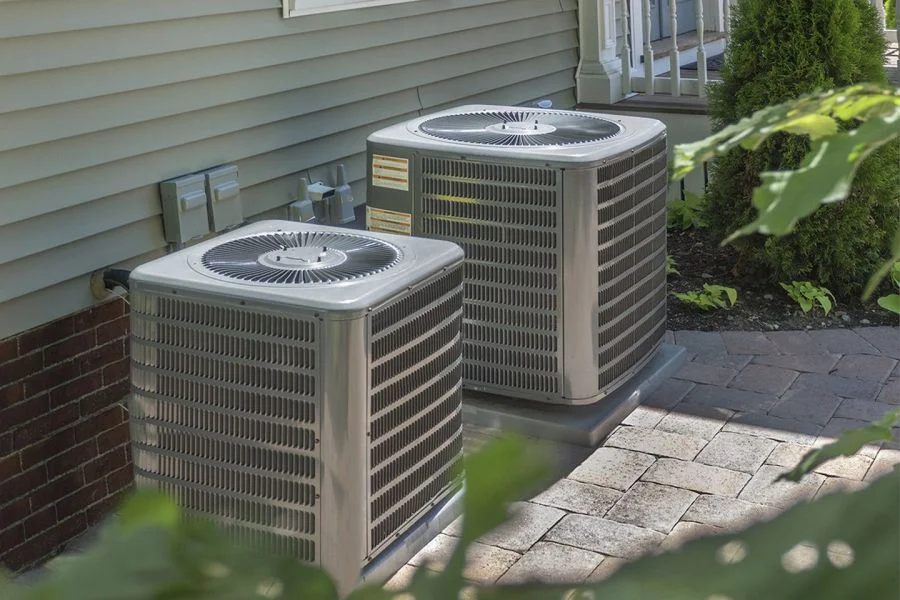
Two outdoor air conditioning units installed on a residential patio beside a house with siding.

What a Stay Cool air quality visit looks like

Inspect the full system

David checks your air handler, existing filter, ductwork condition, and any visible signs of mold or moisture. No guessing. The diagnosis comes from what's actually there.

Identify the right solution

Not every home needs every product. You'll hear specifically what contaminants are the concern, what equipment addresses them, and what's genuinely optional for your situation.

Install and verify

Upgrades go in cleanly, inside your existing system. Before leaving, airflow and system performance get checked to confirm everything is working the way it should.

What our customer says

5.0on Google

“The owner David came over and installed the air conditioning and furnace in record time, 4 hours. This was during a heat wave. He and his crew were professional and courteous. They are a great family run business 😊.”
Denise Soto

Indoor air quality questions, answered plainly

What are the symptoms of poor air quality in a house?
The most common ones are persistent dust buildup, increased allergy or asthma symptoms while at home, dry or irritated throat and eyes, musty odors near vents, and fatigue that improves when you leave the house. If multiple family members notice the same symptoms in the same rooms, the air system is usually the common thread worth investigating.
What causes poor indoor air quality in Canyon Country homes?
In this valley, the main culprits are dust and pollen infiltration from the desert climate, wildfire smoke during fire season, leaky ductwork pulling attic particulates into living spaces, and low humidity from forced-air heating in winter. Newer homes add off-gassing from building materials and limited fresh-air exchange as contributing factors.
How do you fix poor indoor air quality?
The fix depends on the problem. Particle contaminants, dust, pollen, dander, respond to MERV-13 or HEPA filtration upgrades. Biological contaminants like mold and bacteria respond to UV germicidal lights at the air handler. Chemical compounds and odors respond to activated carbon or ionization purifiers. Dry or humid conditions need whole-house humidification or dehumidification. A single visit from David identifies which category your home actually falls into before any equipment gets specified.
What's the difference between air filters, air purifiers, and whole-house air treatment?
Filters physically trap particles in a mesh as air passes through, better filters have tighter mesh and higher MERV ratings. Purifiers use UV light, ionization, or activated carbon to neutralize contaminants the filter mesh can't catch. Whole-house air treatment combines both approaches and integrates directly with your duct system, treating all the air in the home rather than just one room. A portable room purifier from a hardware store handles maybe 400 square feet; a whole-house system handles everything.
Is indoor air quality testing worth it?
If you or a family member has unexplained allergy symptoms, respiratory issues, or unusual fatigue at home, yes, absolutely. For most Canyon Country homeowners, a professional inspection of the air system and ductwork surfaces reveals the problem without laboratory air sampling. Lab testing adds cost and time; a trained eye on your filter, coil, and ducts often tells the same story faster.
How often should I have my air system serviced to maintain good IAQ?
Annual HVAC maintenance that includes filter replacement, coil cleaning, and duct inspection keeps your system from becoming the source of the problem rather than the solution. In Canyon Country, where wildfire smoke season and high pollen counts hit every year, a pre-summer and pre-winter check is worth more than one annual visit. UV bulbs typically need replacement every 12-24 months depending on the product.
What indoor air quality solutions work best for homes with pets?
Homes with pets need filtration that handles fine dander. A MERV-13 pleated filter changed every 60-90 days is a good baseline. Adding a whole-house purifier with activated carbon handles pet odors that filters don't address. If anyone in the home has pet allergies, UV germicidal lights help reduce biological contaminants that accumulate on the air handler coil over time.
What's the difference between air filters, air purifiers, and whole-house air treatment systems?
Filters physically trap particles in a mesh as air passes through. Purifiers use UV light, ionization, or activated carbon to neutralize contaminants the filter mesh can't catch. Whole-house air treatment combines both approaches and integrates directly with your duct system, treating all the air in the home rather than just one room.
How often should I have my HVAC system serviced to maintain good indoor air quality?
Annual HVAC maintenance that includes filter replacement, coil cleaning, and duct inspection keeps your system from becoming the source of the problem. In Canyon Country, where wildfire smoke season and high pollen counts hit every year, a pre-summer and pre-winter check is more protective than a single annual visit. UV bulbs typically need replacement every 12-24 months.

Ready to breathe better at home?

David Medina is CA-licensed (#1036487) and based right here in Canyon Country.

Related

Next step

Tell us about the job

Your name, your number and what needs doing. A person from Stay Cool Air Conditioning and Heating gets back to you.

Rather talk now?(888) 960-6003

★★★★★

The owner David came over and installed the air conditioning and furnace in record time, 4 hours. This was during a heat wave. He and his crew were professional and courteous. They are a great family run business 😊.
Denise S., Google review

No obligation


By submitting this form you agree that we may contact you about your request and share your name and email address with partner companies for email marketing. We never share your mobile number or text message consent with third parties or affiliates for marketing or promotional purposes.