
5.0 on Google Canyon Country (888) 960-6003
HVAC Ducting Installation in Canyon Country

Canyon Country Local

5.0 from 1 Google reviews

HVAC Ducting Installation in Canyon Country

Sized right, sealed tight, and insulated for the Santa Clarita Valley's extreme heat.

Call or text (888) 960-6003

Request an estimate

Tell us what you need
No obligation


By submitting this form you agree that we may contact you about your request and share your name and email address with partner companies for email marketing. We never share your mobile number or text message consent with third parties or affiliates for marketing or promotional purposes.

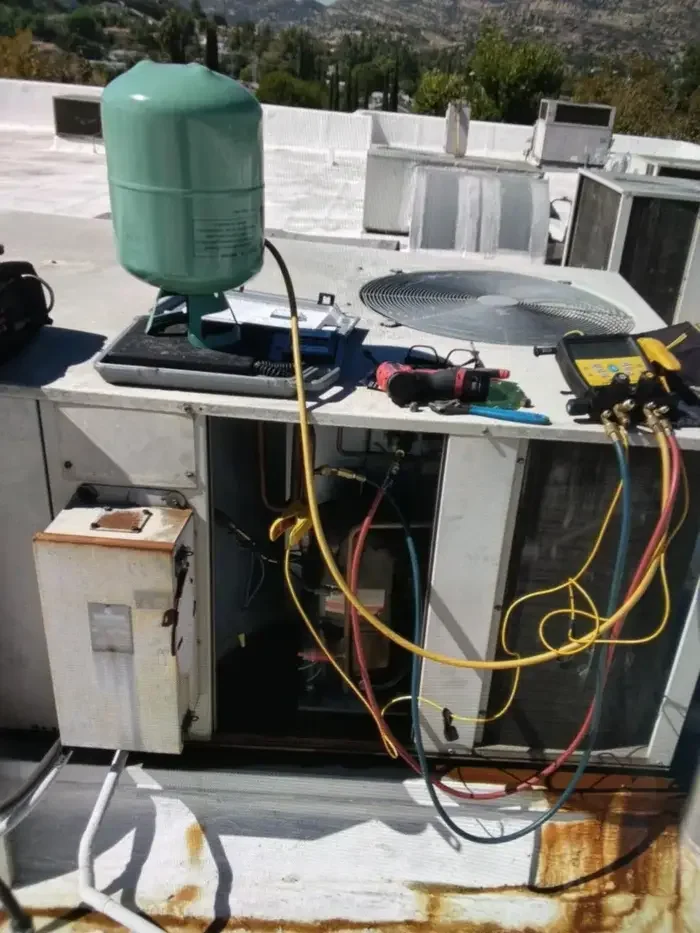
HVAC system installation and service work on a rooftop, showing pressure tank, condensing unit, electrical connections, and associated equipment.

Canyon Country HVAC Duct Installation Done Right

Stay Cool Air Conditioning and Heating handles HVAC ducting installation in Canyon Country for homeowners who want their system to actually perform, not just run. David Medina, the owner and the person who shows up at your door, is a CA-licensed HVAC contractor (license #1036487) with more than 25 years in the trade. If your ductwork is leaking, undersized, or just plain wrong, your AC and furnace are fighting a losing battle no matter how new they are. Call (888) 960-6003 and let's talk about what your home actually needs.

Duct installation isn't a one-size-fits-all job. The layout of your home, the capacity of your HVAC system, the number of supply and return runs, and the insulation value required by Canyon Country's climate all factor into what good ductwork looks like. We calculate airflow in CFM (cubic feet per minute) for each room, size every trunk and branch accordingly, and seal every joint before we insulate. We don't cut corners on insulation either: uninsulated or under-insulated ducts in an attic that hits 150 degrees in July are one of the biggest energy wasters in SCV homes. Every job is different. Contact Stay Cool Air Conditioning and Heating for an accurate estimate.

What HVAC Duct Installation Covers

  • Design and sizing based on CFM calculations for each room and zone
  • Supply and return duct runs in attic, walls, or crawlspace
  • Sealed joints using mastic or metal-backed tape, no duct tape shortcuts
  • Reflective foil insulation rated for high-heat attic conditions
  • Final airflow check at every register before the job is closed

Three HVAC business representatives posing at an outdoor event tent.

Common Duct Problems

Why Canyon Country Homes Need Better Ductwork

These are the issues we find most often in SCV homes, and why they matter.

Undersized Ducts

Too small a duct creates back-pressure that makes your blower work harder and your rooms stay warm even when the AC is running fine. We size every run to match your system's actual output.

Leaking Joints

Loose connections and failed duct tape let conditioned air pour into your attic instead of your living room. Properly sealed joints with mastic or foil tape stop that waste cold.

Poor Attic Insulation

An SCV attic can hit 150 degrees in July. Bare or under-insulated ducts running through that heat shed temperature fast. We wrap to code-minimum R-6, often R-8, depending on your attic depth.

Bad Return Air Routing

A system with too few or mislocated return vents starves the blower of air and creates pressure imbalances room to room. We plan return sizing alongside supply runs, not as an afterthought.

Aging Flex Duct

Older homes in Canyon Country often have flexible duct that's kinked, torn, or compressed at bends. That's not an airflow problem you can tune away, it needs replacement.

Skipping the 2-Foot Rule

Every duct run needs at least two feet of straight, unobstructed length after a fitting before another turn. Ignoring this creates turbulence that kills airflow efficiency through the whole system.

How It Works

Our Duct Installation Process

  1. Design and Load Calculation

    We measure your home's square footage, window count, insulation level, and system capacity to calculate the CFM each room needs. Then we design supply and return runs that deliver it.

  2. Installation and Sealing

    We run rigid sheet metal trunks and flex branch lines, secure every connection, and seal every joint with mastic or foil tape. No shortcuts. We follow the 2-foot rule at every turn and transition.

  3. Insulation and Final Verification

    Every duct run gets wrapped to the insulation level your attic demands. We test airflow at each register before we leave and walk you through what was installed and why.

Rigid vs. Flexible Duct: Which One Does Your Home Need?
Rigid sheet metal ductwork is the stronger performer: smooth interior walls, consistent airflow, no risk of collapse or kinking. It's the right call for main trunk lines where volume matters most. Flexible duct is a legitimate tool for branch runs and hard-to-reach spaces, but only when it's installed without sharp bends, compression, or excessive length. We've seen flex duct crammed into an attic corner at a 90-degree bend that cuts airflow by 40 percent or more. That's not a flex-duct problem; that's an installation problem. We use both materials where they make sense and neither where they don't. For homes where the existing duct system needs replacement rather than a new install, the same sizing and sealing principles apply. The starting point is just older material instead of a blank slate.
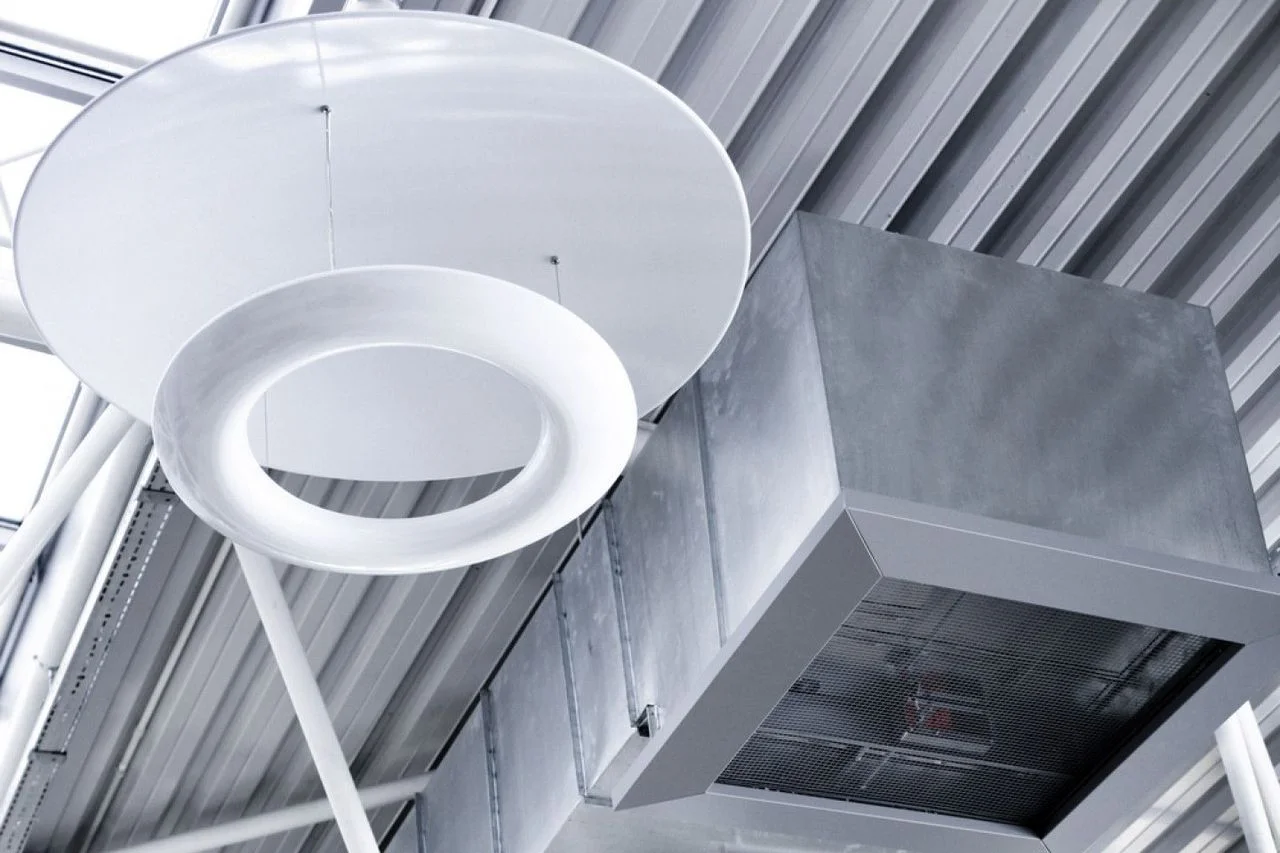
Ductwork and supply plenum installation showing metal trunks and branch connections

The Stay Cool Standard on Every Duct Job

What you get when Stay Cool installs your ductwork.

David Medina holds a CA C-20 license (#1036487) and carries that credential into every duct installation. We won't upsell you on a full replacement when repair is the right call, and we won't skip the load calculation to save an hour. If the numbers say your existing trunk can handle the new branch run, we'll say so. The work has to hold up in a Canyon Country attic for the next 20 years, so we do it once and we do it correctly.
CA-licensed C-20 contractor
License #1036487, verifiable on the CSLB website
Owner on the job
David Medina, not a subcontractor
CFM-based sizing on every install
No guesswork, no rules of thumb
Mastic or foil-tape sealed joints
No standard duct tape, ever

Indoor Air Quality

How Ductwork Affects the Air Your Family Breathes
Leaky or dirty ducts don't just waste energy. They pull unconditioned air from your attic or walls into the living space, and that air carries dust, insulation fibers, and whatever else has accumulated up there. Canyon Country's dry, dusty climate makes this worse than most. Properly sealed ductwork is one of the most direct ways to improve what your family breathes every day. Pair a good duct installation with an indoor air quality solution and the difference is noticeable from the first day. If your current ducts have never been pressure-tested, the leakage rate might surprise you.
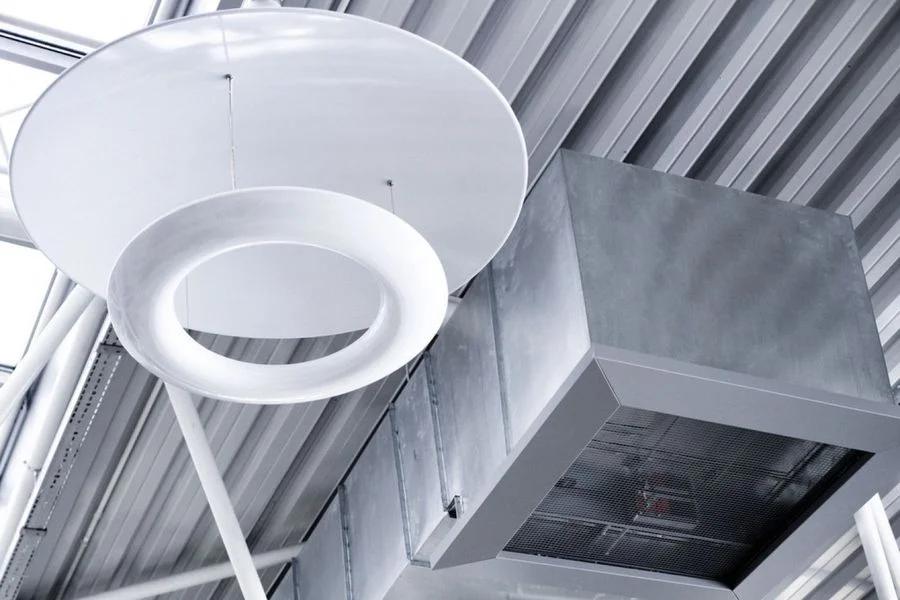
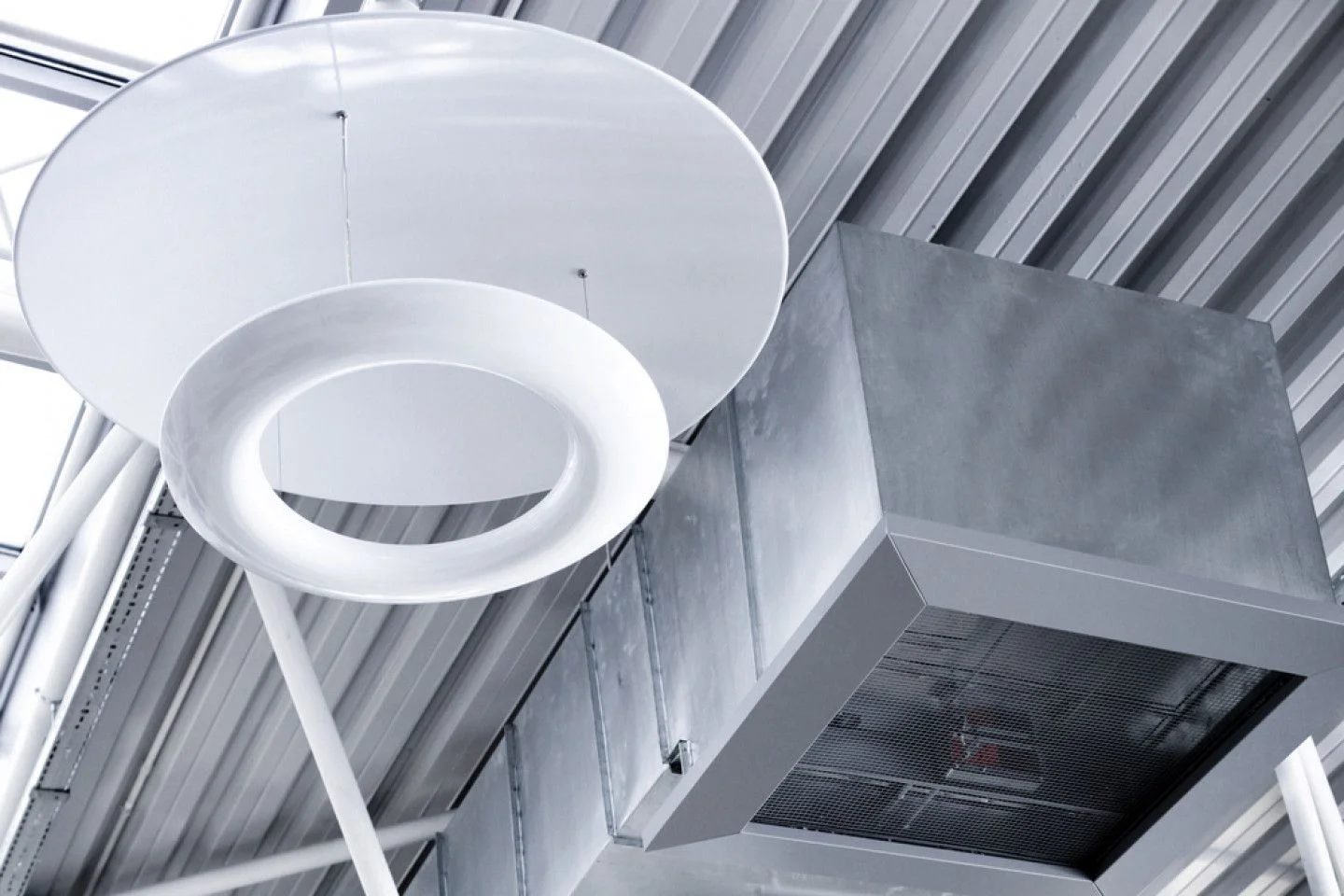
Recessed ceiling ductwork and diffuser installation in an industrial or commercial space with metal corrugated ceiling.

Duct Installation Questions, Answered

What size ductwork do I need for my Canyon Country home?
Duct sizing is calculated in CFM (cubic feet per minute) based on the room's heat load, your HVAC system's total capacity, and the length of each duct run. A common starting point is roughly 1 CFM per square foot of conditioned space, but that figure shifts significantly based on ceiling height, window area, and insulation. For a 3-ton system (which moves about 1,200 CFM), the main return duct typically needs to be 20x20 inches or equivalent, undersizing that return is one of the most common mistakes we see on existing installs in the valley.
What is the 2-foot rule for ductwork?
Every duct run should have at least two feet of straight, unobstructed length after a fitting before the next turn or transition. Without that straight section, airflow becomes turbulent at the fitting and you lose velocity through the entire branch. It matters most at the plenum takeoffs and at elbows near registers, both places where installers commonly shortcut length to save materials.
What is a common mistake in ductwork installation?
The most common mistake we find in Canyon Country homes is unbalanced return air. Contractors install plenty of supply registers but skimp on return runs, which starves the blower and creates positive pressure in bedrooms with closed doors. The second most common is flex duct installed with too many bends and too little sag clearance, which chokes airflow even on a brand-new system. Both problems show up as rooms that never cool evenly regardless of how long the AC runs.
Is it better to undersize or oversize ductwork?
Neither is acceptable, but undersizing causes more immediate problems: higher static pressure, louder airflow noise, reduced system efficiency, and premature blower motor wear. Oversizing wastes materials and can cause velocity to drop so low that air stratifies instead of mixing in the room. Proper CFM-based sizing eliminates the tradeoff entirely. If you're replacing your AC system at the same time, it's the right moment to verify the duct system is sized for the new equipment.
How many types of ducts are in an HVAC system?
Most residential systems use three: supply ducts that carry conditioned air from the air handler to each room, return ducts that pull room air back to the handler, and the plenum (the central distribution box attached directly to the air handler). Within those categories, the material can be rigid sheet metal, flexible duct, or fiberboard. Each has its place, and a properly designed system uses the right type for each application rather than defaulting to flex duct everywhere because it's faster to install.
Can old ductwork in my home be repaired, or does it need replacement?
It depends on what's wrong. Leaking joints and unsealed connections can often be repaired with mastic sealant without replacing the duct itself. Collapsed, torn, or severely kinked flex duct usually needs replacement because the structural damage affects airflow permanently. Original sheet metal duct from the 1970s or 1980s is often still sound structurally but may have deteriorated insulation and dried-out joint seals, a scenario where sealing and re-insulating makes more sense than a full tear-out. We'll assess what you have honestly before recommending a direction. See our duct replacement page for more on when replacement is the better call.
How does proper duct installation improve energy efficiency?
Studies on residential duct leakage consistently find that the average home loses 20 to 30 percent of conditioned air through duct leaks before it reaches the living space. In a Canyon Country attic that reaches 150 degrees in summer, that leakage also means your air handler is working against extreme heat gain. Sealed, insulated ducts sized correctly for your system can meaningfully reduce runtime and lower monthly energy costs. If you've noticed energy bills climbing without a clear reason, leaky ducts are worth investigating first.
How often should HVAC ducts be inspected?
Every three to five years is a reasonable inspection interval for a home where the ductwork is otherwise sound. If you've recently had rodent activity in the attic, done any remodeling work, or noticed uneven cooling between rooms, inspect sooner. Annual furnace maintenance and AC tune-ups include a visual check of accessible ductwork, which catches most obvious problems before they become expensive ones.
Can old ductwork be repaired, or does it need replacement?
It depends on the damage. Leaking joints can often be sealed with mastic without replacing the duct. Collapsed or severely kinked flex duct usually needs replacement because the structural damage is permanent. Original sheet metal from the 1970s or 1980s is often structurally sound but may need re-sealing and new insulation, a repair that makes more sense than a full tear-out in many cases.

Get Your Ductwork Sized and Installed Correctly

One call reaches David directly at (888) 960-6003.

Related

Next step

Tell us about the job

Your name, your number and what needs doing. A person from Stay Cool Air Conditioning and Heating gets back to you.

Rather talk now?(888) 960-6003

★★★★★

The owner David came over and installed the air conditioning and furnace in record time, 4 hours. This was during a heat wave. He and his crew were professional and courteous. They are a great family run business 😊.
Denise S., Google review

No obligation


By submitting this form you agree that we may contact you about your request and share your name and email address with partner companies for email marketing. We never share your mobile number or text message consent with third parties or affiliates for marketing or promotional purposes.